
How to Choose the Right Setting Powder for Your Skin Type
October 15, 2026
Have you ever finished your makeup, only to find your face looking shiny a few hours later? Or applied powder to keep your makeup in place, only to discover that your skin looks dry, cakey or flat?
The problem may not be your foundation. It could be the way you choose and apply your setting powder.
Setting powder is an important step in many makeup routines. It helps set foundation and concealer, control excess shine and create different finishes, from soft matte to smooth and natural.
However, not every powder works the same way for every skin type.
In our previous articles, we explored the differences between foundation and concealer and how to create a flawless, natural-looking base. Now, let’s look at the next step: how to choose the right setting powder for your skin type and makeup goals.
1. What Is Setting Powder and Why Do You Need It?
Setting powder is a face makeup product typically applied after foundation and concealer. Its main purpose is to help set liquid or cream products and refine the appearance of your complexion.
Depending on the formula, setting powder can help:
- Reduce excess shine throughout the day
- Set foundation and concealer
- Create a soft-matte or natural-looking finish
- Minimize the appearance of pores and uneven texture
- Reduce the appearance of makeup creasing in certain areas
- Refresh makeup during touch-ups
Some powders are designed primarily for oil control, while others focus on a soft-focus finish or convenient application.
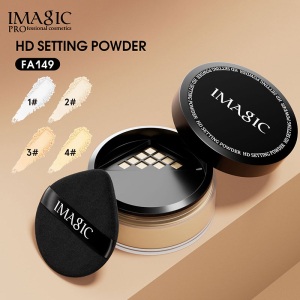
For example, the IMAGIC Air-Whipped HD Loose Setting Powder features a lightweight texture designed to help absorb excess surface oil while creating a soft-focus finish.
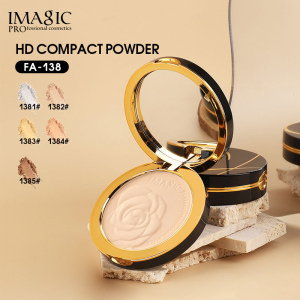
If you prefer a compact format for quick touch-ups, the IMAGIC HD Setting Compact Powder features a compact design with a mirror and puff for convenient application.
Explore the full IMAGIC Powder Collection to discover powder products for different makeup routines and finish preferences.
2. How to Choose Setting Powder for Oily Skin
If your forehead, nose and chin tend to become shiny throughout the day, oil control may be your biggest priority.
A lightweight powder with oil-absorbing properties can help reduce unwanted shine and create a more balanced complexion.
When shopping for setting powder, consider formulas described as:
- Oil-control setting powder
- Matte setting powder
- Lightweight loose powder
- Soft-focus powder
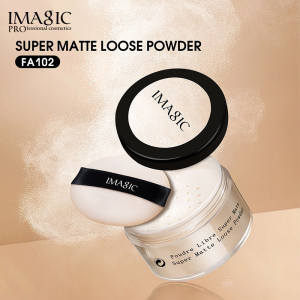
The IMAGIC Blur Loose Setting Powder is designed to help absorb excess oil and soften the appearance of pores for a smoother-looking complexion.
For a soft-focus effect, the IMAGIC Air-Whipped HD Loose Setting Powder can be incorporated into a routine that prioritizes a lightweight, polished finish.
How to Apply Powder to Oily Skin
Step 1: Complete your foundation and concealer application.
Step 2: Pick up a small amount of loose powder with a puff or brush.
Step 3: Concentrate on the forehead, sides of the nose, chin and other areas that become shiny.
Step 4: Gently press the powder onto the skin rather than rubbing it back and forth.
Step 5: Add another thin layer only if necessary.
You do not need to apply a heavy layer across your entire face to control oil. Targeted application can help your complexion look more natural.
3. How to Choose Setting Powder for Dry Skin
If your skin often feels tight or appears flaky, too much powder may emphasize dry patches and make your foundation look less smooth.
That does not mean you must avoid setting powder altogether.
Instead, focus on using a small amount and choosing a formula that creates the finish you want without making your complexion look overly matte.
For dry skin, consider these tips:
- Prepare your skin with a suitable moisturizer before makeup.
- Choose a foundation that works comfortably with your skin.
- Apply powder only where your makeup needs additional setting.
- Avoid repeatedly layering powder over dry areas.
- Keep the cheeks lightly powdered if you prefer a fresh, radiant finish.
A hydrating base can also help your complexion look more comfortable under makeup. The IMAGIC Hydrating Oil-Free Liquid Foundation is an option to consider if you prefer a lightweight foundation with a fresh, radiant-looking finish.
You can still use a small amount of setting powder around the nose or under the eyes if those areas need additional setting.
Dry skin does not always need more products. Sometimes it needs fewer layers.
4. The Best Setting Powder for Combination Skin
Combination skin can be tricky because different areas of your face may have different needs.
Your forehead and nose may become oily, while your cheeks remain comfortable or slightly dry.
Instead of choosing one uniform application technique, try using powder strategically.
For example:
- Apply a light layer to the forehead and nose.
- Use a small amount around the chin if needed.
- Keep powder minimal on the cheeks.
- Add extra powder only when shine becomes noticeable.
The IMAGIC HD Loose Setting Powder can be used to set foundation and help control unwanted shine.
Its loose-powder format makes it suitable for targeted application when you want to keep your T-zone looking more matte without automatically powdering every area of your face.
Remember that combination skin is not identical for everyone. Adjust the amount of powder according to how your skin behaves.
5. Loose Powder vs. Pressed Powder: Which Is Better?
One of the most common questions about face makeup is whether loose powder or pressed powder is the better choice.
Both can be useful. The main differences are their format, application and convenience.
Loose Setting Powder
Loose powder is often preferred for setting foundation at home because it can be applied with a powder brush or puff.
It is particularly useful when you want to:
- Set foundation after application
- Control shine across selected areas
- Create a soft-matte finish
- Apply powder in thin, controlled layers
The IMAGIC HD Loose Setting Powder is an option for setting makeup and managing excess shine as part of your complexion routine.
Pressed Setting Powder
Pressed powder is compact and convenient for carrying in a handbag or makeup bag.
It is useful when you want to:
- Touch up makeup during the day
- Reduce visible shine before an event
- Refresh areas where makeup has faded
- Keep your makeup routine convenient while traveling
The IMAGIC HD Setting Compact Powder features a compact format with a mirror and puff, making it convenient for everyday application and touch-ups.
Which One Should You Choose?
| Your Priority | Recommended Option |
|---|---|
| Setting your base makeup at home | Loose powder |
| Controlling shine in selected areas | Loose or pressed powder |
| Quick touch-ups while traveling | Pressed powder |
| A soft-focus matte finish | A suitable soft-focus loose powder |
| A convenient compact with a mirror and puff | Pressed powder |
You can also use both: loose powder for your initial makeup application and pressed powder for occasional touch-ups.
6. Translucent Powder vs. Tinted Powder
Another factor to consider is whether you want translucent powder or a powder with color.
Translucent Powder
Translucent powder is designed to add a setting layer without noticeably changing the appearance of your foundation when the shade and formula are suitable for your complexion.
It can be useful when you want to control shine while preserving the color of your base makeup.
However, translucent does not automatically mean invisible on every skin tone. Apply a small amount and check the result in natural light.
Tinted Powder
Tinted powder adds some color and may help refine the appearance of your complexion.
It can be useful when you want a little extra coverage or prefer your setting powder to complement your foundation shade.
When choosing a tinted powder, check the available shades and consider how the product looks over your foundation rather than judging the shade in isolation.
Explore the IMAGIC Powder Collection to compare powder options for your preferred makeup style.
7. How to Apply Setting Powder Without Looking Cakey
Even a good powder can look heavy if you apply too much.
The secret is to control the amount of product and build gradually.
Follow this simple technique:
Step 1: Finish your liquid or cream makeup. Blend foundation and concealer before applying powder.
Step 2: Pick up a small amount. If you are using loose powder, tap off excess product before application.
Step 3: Press gently. Use a puff to press powder onto areas that need setting.
Step 4: Blend carefully. Use a soft brush to remove visible excess if needed.
Step 5: Check the finish. Look at your makeup under natural light before adding more powder.
Avoid repeatedly sweeping powder over the same area if your foundation is still moving underneath.
If your makeup already looks dry, adding more powder may make the problem more noticeable.
A lighter application often creates a smoother-looking result.
8. Should You Bake Your Makeup?
Baking is a makeup technique that involves applying a more generous layer of loose powder to selected areas, allowing it to sit briefly, and then brushing away the excess.
It is often used for more dramatic makeup looks, including stage makeup, photography and full-glam styles.
However, baking is not essential for everyday makeup.
A heavy powder layer may emphasize texture or dryness, particularly if your skin is already dry or your foundation has a matte finish.
For daily wear, try setting your makeup with a thin layer of powder first.
If you enjoy baking, experiment with a small area and check how the result looks on your skin before using the technique across your face.
The best makeup routine is the one that creates your desired finish comfortably, not the one with the most steps.
9. How to Keep Your Makeup Looking Fresh Throughout the Day
Setting powder can help your makeup look more polished, but it is not a guarantee that your makeup will remain unchanged in every condition.
Heat, humidity, sweat, natural oil production and frequent touching can all affect how your base wears.
For a more practical routine, keep these tips in mind:
- Use skincare products suited to your skin type.
- Apply foundation in thin layers.
- Set oily areas with powder rather than over-powdering the entire face.
- Use clean brushes and puffs.
- Gently blot excess oil before adding more powder.
- Refresh only the areas that need attention.
For combination or oily skin, the IMAGIC Air-Whipped HD Loose Setting Powder can be used to set foundation and help manage unwanted shine.
For quick touch-ups, consider carrying the IMAGIC HD Setting Compact Powder in your bag.
The goal is to refresh your makeup without repeatedly adding thick layers.
10. How Skin Care Affects Your Makeup Routine
Your setting powder is only one part of your overall complexion routine.
If your skin tends to become oily, choosing appropriate skincare and makeup products may help you manage shine more comfortably.
The American Academy of Dermatology recommends that people with oily skin consider oil-free, water-based makeup and notes that matte products can help reduce shine. Read more in the American Academy of Dermatology’s guide to controlling oily skin.
This is also a useful reminder that more powder is not always the answer. Your skincare routine, foundation formula and powder application should work together.
If you have sensitive or acne-prone skin, choose products that suit your individual needs and clean your makeup tools regularly.
11. Your Simple Setting Powder Routine
Not sure how to incorporate powder into your everyday makeup?
Try this straightforward routine:
Step 1: Complete your skincare routine and apply sunscreen during the day.
Step 2: Apply primer if desired.
Step 3: Blend foundation evenly.
Step 4: Apply concealer to areas that need extra coverage.
Step 5: Choose a loose or pressed setting powder based on your needs.
Step 6: Apply a thin layer to the areas that need setting.
Step 7: Finish your blush, bronzer, highlighter and other makeup.
Step 8: Check your complexion in natural light.
Step 9: During the day, blot excess oil before applying additional powder.
This routine can be adjusted for different skin types and makeup styles, from a natural everyday look to a more polished matte finish.
Final Thoughts
The best setting powder is not necessarily the one that makes your face look the most matte.
It is the one that works with your skin type, foundation and preferred makeup finish.
If your skin is oily, prioritize oil control and apply powder strategically. If your skin is dry, use a lighter hand and avoid emphasizing dry areas. If your skin is combination, focus on the T-zone while keeping the cheeks more natural.
You can choose loose powder for setting your base or pressed powder for convenient touch-ups. You can also combine both when it suits your routine.
Most importantly, remember that a smooth makeup finish comes from the right product combination and application technique—not simply from using more powder.
Explore the IMAGIC Powder Collection to discover loose powders, pressed powders and setting options for different makeup needs.
Find the finish that works for you, and make every layer of your makeup count.

