
How to Stop Makeup From Getting Oily: 10 Tips for a Fresh, Long-Lasting Look
September 9, 2026
You finish your makeup in the morning, look in the mirror and love the result.
Then lunchtime arrives.
Your forehead is shiny, your nose looks greasy, and your foundation seems to be slowly disappearing.
If this sounds familiar, you’re not alone.
Excess oil is one of the most common reasons makeup loses its fresh appearance during the day. But controlling shine doesn’t mean covering your face with layers of heavy powder.
The key is finding the right balance between skin preparation, lightweight makeup, strategic powder application and proper setting.
In our previous guide, How to Make Foundation Last All Day, we looked at why foundation fades and how application techniques can improve its longevity.
This time, we’re focusing specifically on oil control.
Here are 10 practical tips to help keep your makeup looking fresher for longer.

1. Don’t Skip Skin Preparation
It may seem strange, but oily skin still needs hydration.
When your skin feels dry or dehydrated, applying too many mattifying products can sometimes leave your complexion feeling uncomfortable and make you want to add more products later.
Instead, start with lightweight skincare and give it enough time to settle before applying makeup.
The goal is to create a smooth, comfortable base—not an overly greasy or overly dry one.
For oily skin, the American Academy of Dermatology (AAD) recommends choosing oil-free, noncomedogenic products and using a gentle skincare routine to help control excess shine.
2. Choose a Primer That Helps Control Shine
Primer can make a significant difference when your makeup tends to become oily throughout the day.
Instead of applying a large amount everywhere, focus on areas where you typically experience excess shine, such as your forehead, nose and chin.
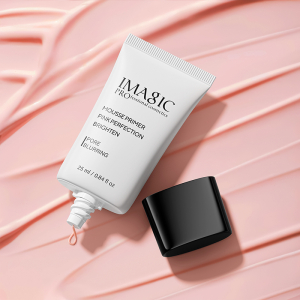
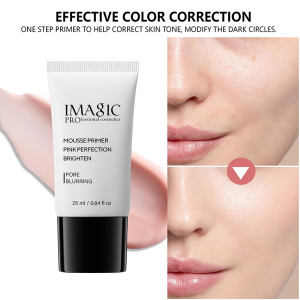
The IMAGIC Silky Hydrating Makeup Primer combines a silky-matte texture with hydration and an oil-controlling formula. According to the product information, it is designed to blur pores, absorb quickly and provide a lightweight base under foundation.
This type of primer can be especially useful when you want your makeup to feel smooth without creating a heavy layer underneath your foundation.
3. Use Less Foundation, Not More
One of the biggest mistakes people make when trying to cover oily skin is applying more foundation.
Unfortunately, more product doesn’t necessarily mean better oil control.
As natural oil builds throughout the day, a thick foundation layer can become more noticeable and may separate around the nose, mouth and other areas with movement.
Instead, apply a thin, even layer and build coverage only where you need it.
For more detailed foundation tips, go back to How to Make Foundation Last All Day.
4. Set Your T-Zone Strategically
You don’t always need to powder your entire face.
If your forehead, nose and chin become shiny faster than the rest of your face, concentrate your powder application there.
The IMAGIC High Definition Loose Powder uses a fine micro-powder texture and matte finish. It is designed to set foundation and absorb excess oil.
Apply a small amount with a puff and gently press it onto areas where you need additional oil control.
The important word here is press, not rub.
Pressing powder into the skin can help set your makeup without unnecessarily disturbing the foundation underneath.
5. Try an Oil-Control Powder for Touch-Ups
If your makeup becomes shiny during the day, carrying a compact oil-control product can make touch-ups much easier.
The IMAGIC Oil Control BB Powder is designed to absorb excess oil while helping create a more matte appearance.
Instead of repeatedly adding foundation when your skin becomes shiny, first remove excess oil and then lightly apply powder.
This approach can help prevent your makeup from becoming thicker and heavier as the day goes on.
6. Don’t Powder Too Much
Oil control doesn’t mean making your entire face completely matte.
If you apply too much powder, your skin can start looking dry, textured or overly cakey.
A better approach is to think about where your skin actually needs powder.
For example:
- More powder on the forehead
- More powder around the nose
- Light powder on the chin
- Less powder on naturally balanced areas
- Minimal powder on areas where you want a more natural finish
This creates a more dimensional complexion instead of a flat, heavily powdered appearance.
7. Use Blush Carefully on an Oily Base
Once your foundation and powder are in place, you can add color.
For oily or combination skin, layering too many creamy products can sometimes make the complexion feel heavier.
A lightweight formula can be easier to work with.
The IMAGIC 8-Color Liquid Blush has a liquid-powder texture with a soft-matte finish. The formula is designed to be lightweight, blendable, waterproof and long-lasting.
For the most natural result, start with a very small amount and build the color gradually.
This prevents the blush from overwhelming your base.
8. Blot Oil Before You Add More Makeup
One of the most useful midday makeup habits is also one of the simplest:
Remove excess oil before adding more product.
If your T-zone becomes shiny, don’t immediately cover it with another layer of foundation or powder.
First, gently blot the excess oil.
Then assess your makeup.
If the foundation is still intact, you may only need a small amount of powder.
This simple two-step approach can make your touch-ups look much more natural.
9. Use Setting Spray to Finish Your Makeup
Setting spray can help bring your makeup layers together while supporting a longer-lasting finish.
The IMAGIC Makeup Setting Spray is designed to provide an oil-control effect while helping makeup last longer. The product information also describes it as lightweight, clear, waterproof and sweat-proof.
Use it as the final step of your makeup routine according to the product directions.
A setting spray isn’t a replacement for good skin preparation or strategic powder application, but it can be a useful final step.
10. Stop Touching Your Face
This may be the simplest tip on the list—and one of the easiest to forget.
Touching your face can transfer oil from your hands to your skin while also disturbing your foundation and powder.
If you frequently rest your chin on your hand, touch your nose or rub your cheeks, try becoming more aware of the habit.
The less you disturb your makeup, the easier it is for your base to stay intact.
A Simple Oil-Control Makeup Routine
If you have oily or combination skin and want your makeup to stay fresh for longer, try this simple routine:
Step 1: Prepare Your Skin
Complete your normal skincare routine and allow the products to settle.
Step 2: Apply Primer
Use a lightweight primer and focus on areas that tend to become shiny.
Step 3: Apply Foundation
Use a thin layer and build coverage only where necessary.
Step 4: Conceal Strategically
Add concealer only to areas that need extra coverage.
Step 5: Set the T-Zone
Use a small amount of loose powder around the forehead, nose and chin.
Step 6: Add Blush
Apply a small amount of blush and blend gradually.
Step 7: Finish With Setting Spray
Use setting spray as the final step to help bring the makeup together.
Step 8: Touch Up Strategically
During the day, blot excess oil before adding powder.
What Should You Do When Your Makeup Gets Oily at Lunchtime?
Don’t panic—and don’t immediately start adding more foundation.
Instead:
1. Blot excess oil.
2. Check whether your foundation has actually moved.
3. Add a small amount of powder only where necessary.
4. Avoid applying another thick layer of foundation over oily skin.
This keeps your touch-up lighter and prevents the makeup from becoming increasingly heavy throughout the day.
Oily Skin Doesn’t Mean You Need a Completely Matte Face
There’s a difference between controlling unwanted shine and removing every trace of natural skin radiance.
Modern makeup doesn’t have to look completely flat.
You can control shine in the T-zone while allowing the rest of your complexion to retain a natural finish.
This is especially important if you want a modern, fresh makeup look rather than an extremely matte one.
The goal isn’t to eliminate every bit of oil.
The goal is to keep excess shine under control while maintaining a comfortable, natural-looking complexion.
The Bottom Line
If your makeup becomes oily by midday, don’t assume that you need more foundation or more powder.
Start with your routine.
Prepare your skin properly, choose a suitable primer, use thin layers of foundation, set oily areas strategically and blot before touching up.
Most importantly, remember that oil control is about balance—not adding more and more makeup.
For a complete guide to long-lasting makeup, read How to Build a Long-Lasting Makeup Look That Still Looks Natural.
And if foundation is the part of your makeup that disappears first, continue with How to Make Foundation Last All Day.
Together, these guides can help you build a more reliable long-lasting makeup routine—from skin preparation to foundation, powder, blush and final setting.

