
How to Make Foundation Last All Day: 9 Mistakes That Make Makeup Fade Faster
September 5, 2026
You spend time getting your makeup base just right, only to notice your foundation disappearing around your nose, breaking up on your cheeks, or becoming shiny by lunchtime.
Sound familiar?
If your foundation never seems to last as long as you want it to, the problem may not be the foundation itself. Your skincare routine, application technique, the amount of product you use, and even how you set your makeup can all affect how long your base stays fresh.
If you’re looking for a complete routine for long-lasting makeup, start with our guide on How to Build a Long-Lasting Makeup Look That Still Looks Natural.
But if foundation is the part of your makeup that always seems to fade first, keep reading.
Here are nine common mistakes—and what you can do instead.
1. Applying Foundation Before Your Skincare Has Settled
One of the most overlooked reasons foundation doesn’t last is applying makeup too soon after skincare.
Moisturizer, sunscreen and other skincare products need a little time to settle into the skin. If you immediately apply foundation while your skincare is still sitting on the surface, your makeup may slide, separate or become patchy.
Try giving your skincare a few minutes to absorb before applying foundation.
You don’t need a complicated routine. The goal is simply to create a comfortable, smooth surface for your makeup.
2. Using Too Much Foundation
More foundation doesn’t always mean better coverage.
Applying a thick layer across your entire face can actually make your makeup more noticeable as it wears away. Areas with facial movement—such as around the nose, mouth and eyes—are especially likely to crease or break up when too much product is applied.
Instead, start with a thin layer.
Then add a little more only where you need additional coverage.
This technique gives you a more natural finish while reducing the amount of product that can move throughout the day.
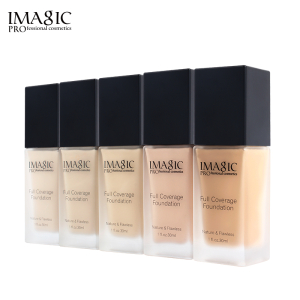
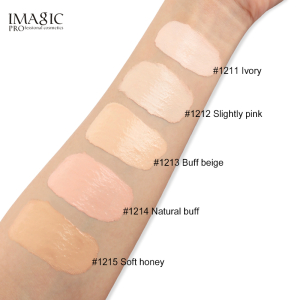
For a buildable base, the IMAGIC Full Coverage Foundation can be worked into your routine. Its lightweight texture is designed to provide coverage while remaining comfortable on the skin.
3. Choosing a Foundation That Doesn’t Match Your Makeup Goals
Not every foundation is designed for the same makeup look.
If you want a lightweight everyday base, you may prefer a different formula than someone preparing for a long event, a hot day outdoors, or a full-glam makeup look.
Think about what you actually need from your foundation.
Do you want:
- Natural-looking coverage?
- A matte finish?
- Hydration?
- Oil control?
- Waterproof performance?
- Long wear?
The best foundation is not necessarily the one with the most coverage. It’s the one that fits your skin and the conditions you’ll be wearing it in.
4. Skipping Powder in Areas That Get Oily
If your foundation looks great in the morning but becomes shiny a few hours later, you may need a little more strategic setting.
You don’t necessarily need to powder your entire face.
Instead, concentrate powder around areas that tend to produce more oil—usually the forehead, nose and chin.
The IMAGIC High Definition Loose Powder has a lightweight micro-powder texture and matte finish, making it suitable for setting foundation and helping manage excess shine.
Apply a small amount and build gradually.
A little powder can go a long way.
5. Applying Powder Too Heavily
There’s another side to setting powder: using too much.
If you apply a heavy layer of powder all over your face, your complexion can start to look dry or overly matte. As the day goes on, the powder may also emphasize texture.
Instead, think about powder as a targeted tool.
Use more where you need oil control and less where your skin already looks balanced.
This creates a more natural finish while still helping your foundation stay in place.
6. Touching Your Face Throughout the Day
This one sounds simple, but it can make a big difference.
Resting your hand on your cheek, rubbing your nose, adjusting your glasses or constantly touching your face can gradually remove foundation.
Your hands also contain natural oils, which can contribute to makeup breaking down.
If you notice a small area fading, try fixing only that area instead of repeatedly touching your entire face.
The less friction your makeup experiences, the longer it is likely to stay intact.
7. Forgetting About the Areas Around Your Nose and Mouth
Some parts of the face naturally experience more movement.
The skin around your nose and mouth is constantly moving when you talk, eat, smile and make facial expressions.
Instead of applying a thick layer of foundation to these areas, use a thinner layer and blend carefully.
If needed, use a small amount of concealer for additional coverage.
This can help prevent the foundation from gathering in fine lines or separating during the day.
8. Adding More Foundation Instead of Fixing the Problem
When makeup starts fading, the natural reaction is often to add more foundation.
But layering fresh foundation over oily, broken-down makeup can sometimes make the situation worse.
Before touching up, gently remove excess oil with a tissue or blotting paper.
Then apply a small amount of powder where necessary.
If you still need more coverage, add a tiny amount of foundation or concealer only to the area that needs it.
This creates a much cleaner touch-up than simply adding another layer across your entire face.
9. Expecting Long-Lasting Makeup Without Proper Setting
Foundation longevity isn’t just about the foundation.
It’s about the entire system:
Prep → Foundation → Concealer → Powder → Color → Finish
Each layer plays a role.
This is why your base routine should be considered as a complete process rather than a single product.
If you want to build a complete long-lasting makeup routine, our long-lasting makeup guide covers the full process, including blush, eyeshadow and lip makeup.
How to Make Foundation Last Longer: A Simple Routine
Here’s a simple routine you can follow when you need your makeup to stay fresh for hours.
Step 1: Prepare Your Skin
Cleanse and moisturize your skin, then allow your skincare to settle.
If you’re wearing sunscreen, give it enough time to set before starting your makeup.
Step 2: Apply a Thin Layer of Foundation
Start from the center of your face and blend outward.
Use less product around areas where your foundation tends to crease.
Step 3: Add Concealer Only Where Needed
Use concealer to target areas that need additional coverage instead of adding more foundation everywhere.
Step 4: Set Your T-Zone
Apply a small amount of IMAGIC High Definition Loose Powder around the forehead, nose and chin.
Add more only if necessary.
Step 5: Add Your Color Products
Once your base is set, continue with blush, bronzer, eyeshadow and lip color.
For example, the IMAGIC 8 Colors Cheek Liquid Blusher can add a fresh flush of color without making your complexion look flat.


Step 6: Finish Your Look
Check your makeup in natural light.
If your complexion still looks skin-like and comfortable, you’re done.
There’s no need to keep adding products simply because you want your makeup to last longer.
What Makes a Foundation Look Natural and Long-Lasting?
The best long-lasting foundation look isn’t necessarily the most matte or the most full coverage.
It’s about balance.
You want enough coverage to even out your complexion, enough powder to control unwanted shine, and enough flexibility in your base so your makeup can move naturally with your skin.
That’s why thin layers are so important.
Instead of trying to create the perfect base with one heavy layer, build your makeup gradually.
The result is usually more comfortable, more natural-looking and easier to maintain throughout the day.
The Bottom Line
If your foundation keeps fading before the day is over, don’t immediately blame the formula.
Start by looking at your routine.
Are you applying foundation before your skincare settles?
Are you using too much product?
Are you skipping powder in oily areas—or using too much of it?
Are you constantly touching your face?
Small changes in technique can make a surprisingly big difference.
For more tips on creating a complete long-lasting makeup routine, read our guide to How to Build a Long-Lasting Makeup Look That Still Looks Natural.
With the right preparation, thin layers and strategic setting, your foundation can look fresher for longer—without feeling like you’re wearing a mask.

